ACT Tutoring

Once a student decides to take the ACT, I use material from real ACTs in one-on-one tutoring sessions to teach content, timing, strategy, and shortcuts that strengthen students’ skills and confidence. For many students, the ACT is the first standardized exam they are taking that will have a significant impact on their life and future, and of course every student feels considerable pressure to do well.
 
Personalized one-on-one tutoring support is the most efficient way to reduce test anxiety and improve performance. When students feel confident about their ability and preparation, they are more likely to achieve the results they seek.
 
As most colleges formally or informally superscore (i.e., take the highest score from each section across multiple test dates), students typically take the ACT two or three times, once in the 11th grade and once or twice in the 12th grade. We recommend students allow at least six months for ACT preparation so they’re prepared to achieve their greatest potential. If you’re reading this with less time than the recommended 6+ months, we can still quickly develop strategies to accelerate ACT tutoring.
 
Schedule a complimentary consultation to find out how the best ACT tutoring in New York can help your child get the highest score possible on a college entrance exam that matters so much.

What is the ACT?

The ACT is a college entrance examination accepted by all college admissions offices throughout the country as an alternative to the SAT. Because the ACT tests students in a different manner than the SAT, some students find it better suited to their aptitude. Some parents and even a few educators still mistakenly believe there is an advantage to submitting the SAT over the ACT. However, colleges do not have a preference between the SAT or ACT, so you should choose the test that is a better fit for you, and I can help make that determination.

How can I help?

While I am well versed in the structure, content, strategy, and timing of the ACT, my experience has shown that properly assessing a student’s unique learning style and aptitude while simultaneously building effective rapport allows me to design a tutoring approach that will achieve the quickest and most desirable results. I know the ACT well (having scored in the 99th Percentile myself) and have considerable experience successfully supporting students.

Who takes it and when?

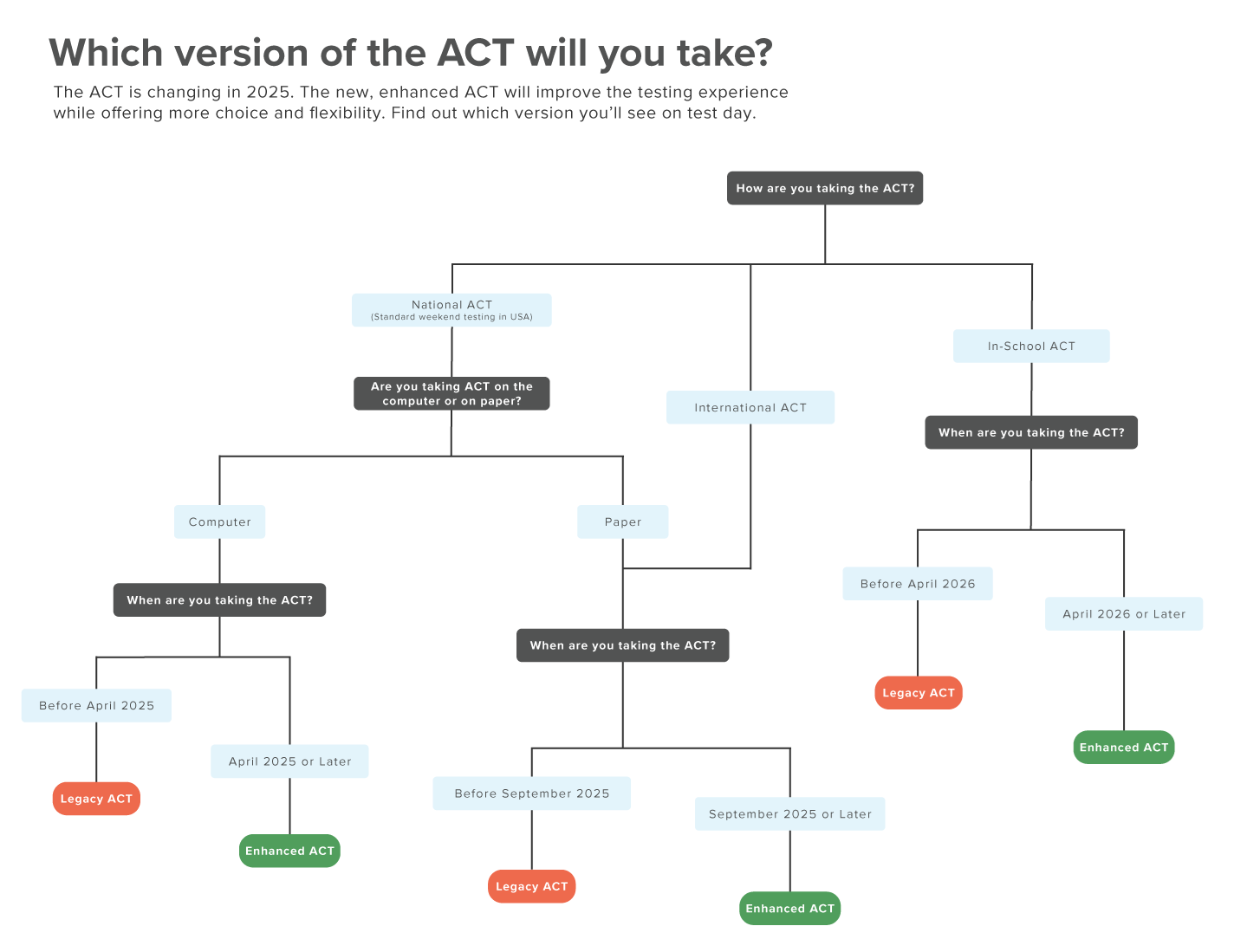
Students typically take the ACT two to three times, generally in the 11th grade and again in the 12th grade, allowing sufficient time between each test for additional practice and focused ACT preparation. The test is offered on 7 different dates throughout the school year. Please see this page for this year’s test dates.

How are the ACT and SAT different?

Because SAT questions require more processing and reasoning, the SAT grants more time per question. Conversely, ACT questions are more straightforward, and as a result, the test can feel more like an achievement test that prioritizes ”what you know,” timing, and endurance.


​​How do I know which test is better for my child?

As both tests are viewed equally in the eyes of college admissions staff, the decision of which test to take is an important one. I will identify a student’s strengths and weaknesses, aptitude, and learning style to assess which test is the better fit. Typically, a student will work through sections of each test to gauge comfort and aptitude before a decision is made. After review and working through material from each test, students almost always express a strong preference or comfort level, which serves as a primary indicator of which direction to go.

When should preparation begin?

The amount of preparation required for the ACT varies with each student. Just as no two students are the same, preparation for every student is also different. The following factors should be considered:
  • Is the student working at grade level?
  • Are there concepts or material on the exam that require significant review?
  • Does the student typically perform well on standardized exams?
  • Is anxiety a factor in performance?
  • Does the student need to learn how to use extra time accommodation?
  • Is motivation an issue?
  • Is the student able to focus his or her full attention on preparation?
  • Does the student have time to complete homework assignments as part of preparation?
  • Is the student applying to highly competitive schools for which a higher score is essential?
Most students begin preparation early in their junior year, but that varies depending upon the starting point and comfort level of the student. However, it is never advisable for students to wait until a few weeks before their first attempt. Just as cramming for a test in school is rarely productive, waiting until right before the ACT exam can generate significant and sometimes even debilitating anxiety. The ideal approach is to spread out preparation over a longer period so the student doesn’t feel an intensifying pressure to put it all together quickly.
 
For many students, the ACT is the first time they are taking a standardized test that will have a substantial impact on their future, and that realization alone can generate substantial anxiety. Getting an early start can often help ameliorate anxiety and put students in a significantly better position to achieve their greatest potential.
 
I recommend starting the preparation process with a timed full-length practice test to identify a student’s strengths and weaknesses. Taking a practice exam provides a valuable opportunity for students to work on test-taking skills and to see how they perform under pressure. A practice exam also helps students develop better time management skills.

What’s on the ACT?

Should my child take the writing test?

Very few colleges require it. Currently, most schools either don’t look at your ACT Writing scores at all, or they’ll consider them, but they won’t have a large impact on your application (and not doing ACT Writing won’t hurt your application). You can look up schools’ most up-to-date standardized testing policies on their individual websites: just search for “[school name] ACT writing requirement” online.

When are ACT scores released?

Multiple choice scores are normally available two weeks after each national test date, but it can sometimes take up to eight weeks. Writing scores are normally available about two weeks after your multiple-choice scores.

How are ACT scores reported?

Scores are reported separately in each of the four sections on a scale of 1-36. These four scores are averaged to form a “composite score” on the same scale.
 
ACT provides an automatically calculated ACT superscore to all students who have taken the ACT more than once. It can be beneficial because it takes the average of the four best subject scores from each ACT test attempt and combines them to create your superscore.
 
Colleges each have their own policies about accepting superscores. If you plan to submit your scores to a specific college or university, first research to see if they accept superscores. An ACT score report costs $15 to send and you can choose to send an individual test score or your superscore. If you do send a superscore report, the college will also receive your highest full composite score along with your superscore. Superscores will be available on your ACT account after you take your second test. 
 
Scoring
  • The composite score is reported in the range 1-36
  • The test is scored in the four separate sections: English, math, reading and science each on a scale of 1-36. The composite score is the average of these four scores.
  • ​The essay score is reported separately. It is scored over 4 areas (Ideas and Analysis, Development and Support, Organization, and Language Use and Conventions) by two graders who will each assign a score of 1–6 for a total score of 2–12.

Featured ACT testimonial:

I worked with Kenny for about a year and a half to improve my ACT score. He was amazing and super helpful every step of the way. I would definitely recommend Kenny to anyone who is looking for an engaged tutor who really personalizes their methods to your specific areas of strength/weakness. His teaching methods and schedule were perfect for me, and I really couldn't have gotten the score I did without him. Thank you!
- Rania Haque

Schedule a Free Consultation Today